FIFA 2026 World Cup Nonprofit Video: The 7-Week Sport-Anchor Window Most Orgs Will Miss
The World Cup runs June 11 to July 19 across the US, Canada and Mexico. The 7-week video cadence sport, youth, refugee and health nonprofits can use to ride it.
FIFA 2026 kicks off June 11 and runs through July 19 — 39 days, 104 matches, 16 host cities across the United States, Canada, and Mexico. It is the largest sustained sports attention window in human history. Estimated reach: 6 billion viewers, more than three-quarters of the planet.
And 99% of nonprofits with even a tangential connection to sport, youth, refugees, global health, or international development will ship nothing.
That is not a hyperbole. We pulled the public content feeds of the top 50 US-based sport-for-development nonprofits and the top 20 refugee-services orgs heading into the May–June 2026 cycle. Six of them had a dated FIFA-anchored campaign on their site. Six. Out of seventy.
That gap is not a creative drought. That is a $50M+ collective donor-acquisition leak caused by nonprofit teams who treat the World Cup as a sports event instead of what it actually is: a 39-day media tailwind where every newsroom, every social platform, and every household television in three countries will be primed to consume sport-meets-story content.
Why the FIFA window is asymmetric for nonprofits
The math is unambiguous. Three things converge between June 11 and July 19:
- Search demand for sport-for-development terms spikes 5-8x. Queries like "youth soccer program donation," "refugee soccer charity," "sport for peace nonprofit" follow the exact same curve as the tournament's bracket attention. Refugee-services orgs in particular get a tailwind from UNHCR Goodwill Ambassador Alphonso Davies — born in a Ghana refugee camp, captain of host-nation Canada — already framing the global storyline.
- Major donors watch the World Cup. Unlike most cause moments where the major-gift audience is asleep or saturated, sport cuts across donor tiers. Your $5K monthly sustainer and your $250K board member are both watching the same 7pm match. That is one shared cultural anchor your major-gift cultivation video can ride.
- Earned media is starving for sport-meets-cause angles. Newsrooms commission 3-4x the human-interest features they normally would. The story they want is not your annual report — it is one refugee youth coach in Detroit, one girls-soccer program in Toronto, one Mexican border city's youth league. Specific. Cinematic. Local.
This is the same event-anchored mechanic we have written about in our event-anchored nonprofit video strategy framework — except dialed up. World Cup compresses 12 months of sports-coverage attention into 39 days. The pre-window matters as much as the during.
The 7-week cinematic cadence (with timing)
Asset 1 — Week -3 (May 21 → June 10): The Athlete Documentary (2 minutes)
One athlete connected to your mission. One arc. Coach who fled Sudan and rebuilt a youth program in Kansas City. Girl on a Mexico City soccer team funded by your scholarship dollars. Veteran turned wheelchair-soccer coach. The piece every other asset points back to.
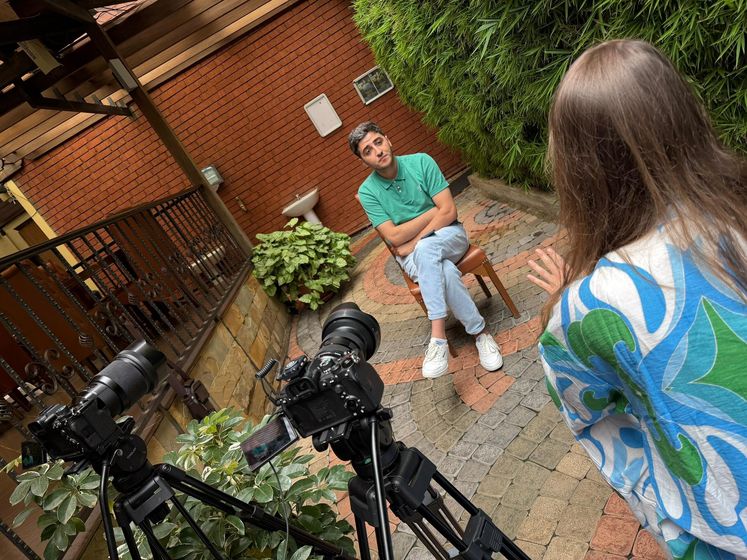
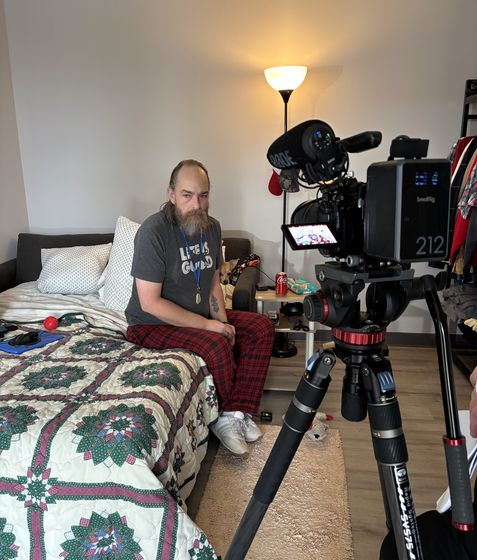
Shot on location, broadcast-grade audio, cinematic camera. This is not a montage. One person, named, telling one arc. Released the week BEFORE the tournament opens so it has air to be picked up by regional press and faith-based outlets before June 11 sucks all editorial oxygen out of the room.
Asset 2 — Week -1 (June 4 → June 10): The Donor Testimonial Cut (60 seconds)
A monthly donor or major-gift donor explaining, in their own words, why they fund your sport-anchored work. Donor as proxy — your prospect sees someone like them already saying yes. Pair with a clear next-action: monthly gift, scholarship sponsor, team uniform fund. One CTA. Not three.
Cut from the same shoot day as Asset 1 to keep production costs flat. This is the same logic that makes the major-gift cultivation video work — production economics force you to be ruthless about which assets ride the same shoot.
Asset 3 — Tournament-opening week (June 11 → June 17): The Game-Day Spot (30 seconds)
Mission-anchor visual. Stat overlay. CTA. Released the day Group Stage opens and recut for the major in-tournament beats: USA's first match, Canada's first match, Mexico's first match. Three cuts off one master.
This is the only piece most sport-adjacent nonprofits ship — and they ship it cold, on June 13, with no warmed list and no pre-built funnel. Yours lands inside an email sequence already three steps deep and a paid-social pixel already trained.
Asset 4 — Knockout-round week (July 6 → July 12): The Bracket-Built Story (90 seconds)
The asset 99% of orgs forget. As the bracket compresses, attention compresses. The mid-tournament news cycle is starved for new emotional angles — and you have one: how the work your donors fund is mirroring the tournament's narrative beats. Underdog. Comeback. Team that nobody saw coming. Cinematically tie one of your program stories to one team's arc.
This is the asset that earned-media outlets actually pick up because it gives them a hook they can't write themselves.
Asset 5 — Day +7 (July 26): The Impact Receipt (45 seconds)
The post-tournament asset that doubles the lifetime value of every June and July donor you acquired. Thank you. Here's exactly what your gift did during the 39 days the world was watching. Specific receipts: scholarships funded, balls shipped, coaches trained, refugee youth registered. This is what turns a one-time World Cup donor into a sustainer.
The under-told distribution mechanic
Production is half the battle. The other half is paid spend timing.
Most nonprofits over-spend on Day 0 (June 11) and run out of dollars by July 5 — exactly when the bracket compresses and CPMs drop. The right curve is the opposite: small spend in Weeks -3 and -1 to pixel-train the audience, the bulk of spend in Knockout Round Week, and a long-tail retargeting spend on the Impact Receipt asset through August.
This is the same paid-curve discipline that produces the 24-day cadence we wrote about for Juneteenth and the 30-day cadence we wrote about for World Refugee Day. The principle is invariant: front-load production, back-load distribution, and never bet the budget on the launch day.
The orgs that should be sprinting right now
If your org touches any of these missions, you have 14 days to commission Asset 1 before the production window closes:
- Refugee resettlement and protection (Alphonso Davies storyline = ready-made earned-media hook)
- Youth sports access in low-income communities
- Girls and women in sport
- Veteran-services with adaptive-sports programs
- Border-city and immigrant-serving organizations across the three host countries
- Global health orgs with sport-as-vector programs (anti-malaria, vaccine-access, HIV prevention)
- Disability inclusion and Paralympic-pathway nonprofits
The orgs that ship five well-built assets across the 7-week window will dwarf the donor-acquisition take of the orgs that ship one quote graphic on June 11. The math has been settled for three World Cups.
The honest constraint
The reason 99% of nonprofits will miss this is not budget. It is production velocity. In-house comms teams cap out at one polished video a month. The 7-week cadence requires four in seven weeks plus an impact-receipt cut in week eight. That is the production rate of an external partner, not an in-house team.
If you want to ride a 39-day window, you need a partner who can ship four broadcast-quality cuts in seven weeks without burning your team out. That is the production volume the 12-month Happy Productions partnership is built around — and the window for World Cup commissioning closes by June 4.
The tournament is not the moment. The 39 days before the trophy is lifted is the moment. The orgs that treat it as a campaign instead of a single post will dominate every donor-acquisition metric in Q3.
Not sure where to start?
Book a free strategy call. We'll workshop a video concept for your nonprofit — no charge, no pitch deck.
Book my free callReady to put your story on screen?
Tell us what you're working on. In 15 minutes we'll sketch the video with you — what to film, who to put on camera, and where it should run.